

Do You Need a Wheel Alignment After Hitting a Pothole?
You hit a pothole, felt a hard jolt through the steering wheel, and now you are wondering whether your vehicle needs a wheel alignment. Not every pothole impact automatically means the alignment has changed, but a hard hit can affect tires, wheels, steering, suspension components, or wheel alignment.
For Lafayette and West Lafayette drivers, potholes and rough pavement can become especially noticeable after Indiana’s freeze-and-thaw cycles. Knowing what to look for after a hard impact can help you catch a tire, suspension, or alignment concern before it leads to additional tire wear or changes in how the vehicle handles.

Can Hitting a Pothole Knock Your Car Out of Alignment?
Yes, a strong pothole impact can contribute to an alignment change, particularly when a wheel strikes the edge of a deep pothole with significant force. However, alignment is only one area that should be considered after a hard impact.
A pothole can also affect the tire, wheel, steering, or suspension. That is why it is important to pay attention to how the vehicle drives afterward instead of assuming every symptom is automatically an alignment problem.
After Hitting a Pothole, Pay Attention To:
- The vehicle pulling left or right
- A steering wheel that no longer sits straight
- New vibration through the steering wheel or vehicle
- Uneven or unusual tire wear
- Visible tire or wheel damage
- New noises from the wheel or suspension area
- A change in steering or handling
- Loss of tire pressure
Signs You May Need a Wheel Alignment After a Pothole
Your Vehicle Pulls to One Side
If your vehicle consistently drifts or pulls left or right on a relatively flat, straight road, the alignment should be checked. Tire pressure and other mechanical conditions can also affect tracking, so diagnosis matters.
The Steering Wheel Is Off-Center
When driving straight ahead, the steering wheel should normally appear centered. If it suddenly sits noticeably to one side after a pothole impact, an alignment inspection may be appropriate.
Uneven Tire Wear Appears
Alignment problems can contribute to uneven tire wear. Wear concentrated along one edge of a tire or unusual tread patterns should be inspected rather than ignored.
The Vehicle Feels Different
If steering suddenly feels less predictable, the vehicle wanders, or handling changes after a hard impact, have the tires, wheels, suspension, and alignment evaluated.
What Should You Check Immediately After Hitting a Pothole?
If the impact was significant, find a safe place to stop and look at the affected tire and wheel before continuing a long drive.
Pay particular attention to tire pressure, sidewall damage, wheel damage, and anything that looks different from the other tires.
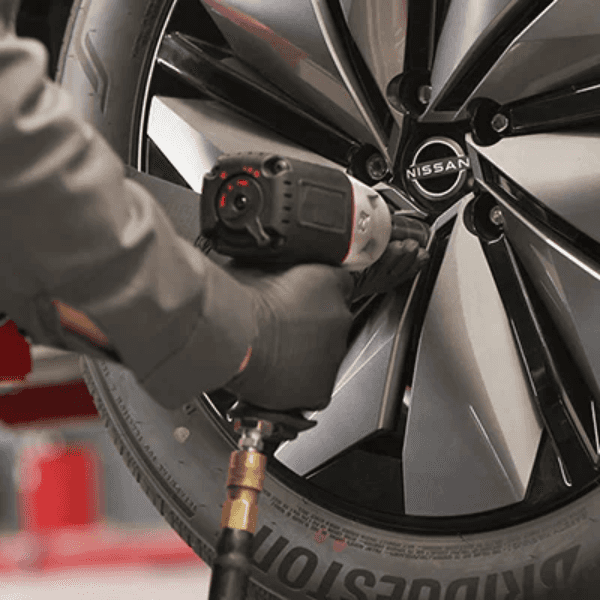
Inspect the Tire for:
- Loss of air pressure
- Bulges in the sidewall
- Cuts or cracking
- Exposed cord or fabric
- Visible punctures
- Damage near the wheel or bead area
- Unusual tread damage
A visibly damaged tire should be taken seriously. If the tire is rapidly losing air, has a significant sidewall bulge, or shows structural damage, avoid continuing to drive on it unless it has been determined to be safe.
Does Steering Wheel Vibration Mean You Need an Alignment?
Not necessarily. This is an important distinction.
Wheel alignment problems are more commonly associated with pulling, off-center steering, handling changes, or uneven tire wear. A new vibration after hitting a pothole may instead involve a damaged tire, bent wheel, wheel balance issue, or another component.
If the vibration began immediately after the impact, an inspection can help determine what changed.
Possible Alignment Symptoms
- Vehicle pulling
- Off-center steering wheel
- Uneven tire wear
- Changed steering feel
Other Pothole Symptoms
- Steering wheel vibration
- Sudden tire pressure loss
- Visible wheel damage
- Clunking or unusual noises
- Tire sidewall damage
Why Tire Wear Matters After an Alignment Change
Your tires are designed to contact the road at specific angles. When alignment changes, the way the tire meets the road can change as well.
Over time, incorrect alignment can contribute to uneven tread wear. That may shorten the usable life of the tire even if the vehicle still seems reasonably easy to drive.
This is one reason it is worth addressing obvious alignment symptoms sooner rather than waiting until the tire wear becomes severe.
Can a Pothole Damage More Than the Alignment?
Yes. A strong road impact can affect more than wheel alignment.
Depending on the severity and location of the impact, a technician may need to evaluate several areas of the vehicle.
Tires
A tire can develop sidewall damage, internal damage, pressure loss, or tread damage following a hard pothole impact.
Wheels
Hard impacts can damage or deform a wheel. Wheel damage can contribute to vibration, air loss, or changes in how the vehicle drives.
Suspension
Suspension components help control wheel movement and vehicle stability. An unusually hard impact may warrant a closer suspension inspection.
Steering Components
If steering response feels different after the impact, the steering and related components may need to be evaluated along with the alignment.
What Happens During an Alignment Inspection?

Before making an alignment adjustment, the vehicle should be evaluated for conditions that could affect the results.
A technician may inspect tire condition and pressure, steering components, suspension components, and other relevant areas before measuring wheel alignment.
Alignment equipment measures the position and angles of the wheels against vehicle specifications. When adjustments are available and needed, the technician can correct the alignment toward the specified range.
What Do Camber, Caster, and Toe Mean?
You may hear these terms when discussing wheel alignment. They describe different aspects of wheel and steering geometry.
Camber
Camber describes the inward or outward tilt of the wheel when viewed from the front of the vehicle.
Toe
Toe describes whether the fronts of the tires point slightly toward or away from each other when viewed from above.
Caster
Caster relates to the steering axis and contributes to steering stability and how the steering wheel returns toward center.
You do not need to diagnose these angles yourself. If the vehicle begins pulling, the steering wheel changes position, or tire wear becomes uneven, an alignment measurement can help determine whether the angles remain within specification.
Should You Get an Alignment After Every Pothole?
No. Driving over a small pothole does not mean you automatically need an alignment.
If the vehicle continues driving normally, the steering wheel remains centered, tire pressure is stable, and there are no new vibrations, noises, visible damage, or handling changes, immediate alignment service may not be necessary.
A hard pothole strike is different. If you notice a change after the impact, having the vehicle inspected is the safer approach than assuming the alignment is fine.
An Inspection Makes More Sense When:
- The impact was unusually hard.
- The tire struck the pothole edge directly.
- The steering wheel changed position.
- The car now pulls left or right.
- You feel a new vibration.
- Tire pressure dropped afterward.
- You see tire or wheel damage.
- You hear a new noise while driving.
Can Incorrect Tire Pressure Feel Like an Alignment Problem?
Yes. Uneven tire pressure can affect how a vehicle feels and tracks on the road.
Before assuming the vehicle needs an alignment, check the tire pressures when appropriate and compare them with the vehicle manufacturer’s recommended specifications.
If pressure is correct but the vehicle still pulls, handles differently, or has an off-center steering wheel, schedule an inspection.
Why a Multi-Point Inspection Can Help After a Hard Impact

A hard pothole impact does not always create an obvious problem that can be identified from the driver’s seat.
A multi-point inspection can provide an additional look at areas such as tire wear and visible suspension components. DeFOUW Nissan’s Nissan Express Service multi-point inspection includes checks of areas such as shocks, suspension, tie rods, bushings, axles, and tire condition.
If you specifically suspect alignment or impact damage, explain what happened when scheduling service so the technicians know what symptoms you experienced and which wheel took the impact.
DeFOUW Nissan’s Under-Vehicle Inspection Technology
DeFOUW Nissan also uses Under Vehicle Inspection, or UVI, scanning technology as part of its service capabilities.
The system captures detailed underbody imagery that can assist technicians in identifying conditions such as impact wear, corrosion, or other visible underbody concerns that may deserve closer inspection.
For Indiana drivers dealing with potholes, rough pavement, gravel roads, winter road conditions, and road debris, inspecting areas beyond the tire itself can be useful after a significant impact.
How Often Should You Check Your Wheel Alignment?
There is not one universal mileage interval that applies to every driver and every vehicle. Alignment should be checked when symptoms appear, following certain suspension or steering repairs, or when a technician identifies abnormal tire wear or another reason to measure alignment.
Road conditions also matter. A driver who regularly encounters construction zones, potholes, curbs, or rough rural roads may have different inspection needs than someone primarily driving on smooth highways.
Indiana Roads Can Be Hard on Tires and Alignment
Lafayette-area drivers deal with changing road conditions throughout the year. Winter freezing, spring thawing, construction, road repairs, and heavy traffic can all contribute to uneven pavement and potholes.
Drivers commuting between Lafayette and West Lafayette, traveling around Purdue University, using local city streets, or driving rural roads throughout Tippecanoe County may encounter a wide variety of road surfaces in a normal week.
If you cannot avoid a pothole safely, maintaining control of the vehicle is more important than making a sudden maneuver into another lane or nearby traffic.
Does a Wheel Alignment Fix a Damaged Tire or Wheel?
No. Alignment service adjusts wheel geometry. It does not repair physical tire or wheel damage.
If a pothole damaged a tire or wheel, that concern must be addressed separately. The vehicle may need both repair or replacement of the damaged component and an alignment inspection.
One Pothole Can Lead to Different Service Needs
Alignment concern: Pulling, off-center steering, or uneven tire wear.
Tire concern: Pressure loss, bulge, cut, tread damage, or other visible damage.
Wheel concern: Visible deformation, vibration, or difficulty maintaining tire pressure.
Suspension concern: New noises, handling changes, or unusual movement after the impact.
Can You Keep Driving If the Car Pulls After a Pothole?
If the vehicle begins noticeably pulling, steering differently, vibrating, losing tire pressure, or making unusual noises after a hard impact, have it inspected rather than continuing to drive normally for an extended period.
How urgently the vehicle needs attention depends on the symptoms and severity. Sudden tire pressure loss, a damaged sidewall, major vibration, significant steering changes, or other serious symptoms may require stopping sooner.
Tire Maintenance After an Alignment
Alignment and tire maintenance work together. Even with proper alignment, tires should still be maintained according to the vehicle’s requirements.
Regular tire rotations can help distribute tire wear more evenly across the set. Tire pressure should also be monitored, and tread should be inspected periodically for unusual wear patterns.
If a tire has already developed significant uneven wear because of an alignment concern, correcting the alignment will not restore the tread that has already worn away. The tire should still be evaluated for continued serviceability.
Schedule Wheel Alignment Service in Lafayette, Indiana

If your vehicle started pulling, vibrating, steering differently, or showing unusual tire wear after hitting a pothole, DeFOUW Nissan of Lafayette can inspect the vehicle and determine what service may be appropriate.
DeFOUW Nissan provides tire, alignment, suspension, and other automotive service for Nissan vehicles as well as other major makes and models.
Have Your Vehicle Checked After a Hard Pothole Hit
Schedule service if something feels different after a pothole impact, or learn more about tire care at DeFOUW Nissan.
Questions About Pothole Damage or Wheel Alignment?
Tell the DeFOUW Nissan service team what happened and what you noticed afterward. Details such as which side hit the pothole, whether the steering changed immediately, or whether the tire lost pressure can help when evaluating the vehicle.
Frequently Asked Questions
Do I need a wheel alignment every time I hit a pothole?
No. A minor pothole impact does not automatically mean the vehicle needs an alignment. If you notice pulling, an off-center steering wheel, uneven tire wear, handling changes, or other symptoms after a hard impact, an inspection is recommended.
How do I know if a pothole knocked my car out of alignment?
Common signs can include the vehicle pulling left or right, the steering wheel sitting off-center while driving straight, changes in handling, or unusual tire wear.
Can hitting a pothole cause steering wheel vibration?
Yes, but vibration does not automatically mean the alignment is the problem. A pothole can also affect a tire, wheel, wheel balance, or other components. A new vibration after an impact should be inspected.
Can a pothole damage a tire without causing a flat?
Yes. A tire can develop damage without immediately losing all of its air. Inspect for bulges, cuts, pressure changes, tread damage, or other visible concerns after a significant impact.
Can a pothole bend a wheel?
A sufficiently hard impact can damage a wheel. Symptoms may include vibration, visible damage, or difficulty maintaining tire pressure. The tire and wheel should be inspected if you suspect damage.
Why is my steering wheel crooked after hitting a pothole?
An off-center steering wheel after a pothole impact can be a sign that wheel alignment or another steering or suspension condition should be checked.
Can bad alignment wear out tires?
Incorrect alignment can contribute to uneven tire wear. Addressing the underlying alignment concern can help prevent additional abnormal wear, but it cannot reverse tread wear that has already occurred.
Does a wheel alignment fix vibration?
Not always. Vibration can have several causes, including tire damage, wheel damage, balance concerns, or other mechanical conditions. The cause should be diagnosed before assuming an alignment will correct it.
Can DeFOUW Nissan perform wheel alignment service?
Yes. DeFOUW Nissan provides tire rotation, alignment, tire replacement, suspension, and other automotive service in Lafayette, Indiana.
Should I get my suspension checked after hitting a large pothole?
If the impact was severe or you notice new noises, handling changes, pulling, vibration, or other symptoms afterward, inspecting the suspension along with the tires, wheels, and alignment can help identify the cause.
This article provides general vehicle-maintenance information. Symptoms such as pulling, vibration, tire-pressure loss, unusual noises, or steering changes can have multiple causes. A professional inspection may be needed to determine the specific condition of a vehicle.
Service resources: DeFOUW Nissan Tire Care, DeFOUW Nissan Service Center, Schedule Service, and Nissan Service and Maintenance FAQs.

0 comment(s) so far on Do You Need a Wheel Alignment After Hitting a Pothole?